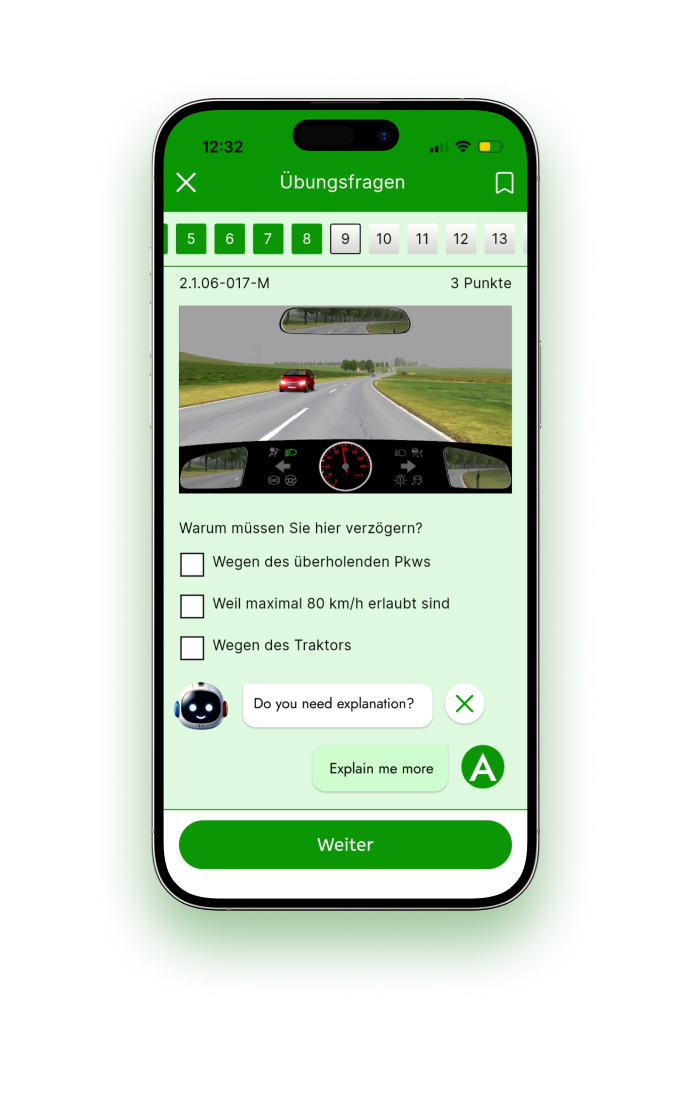
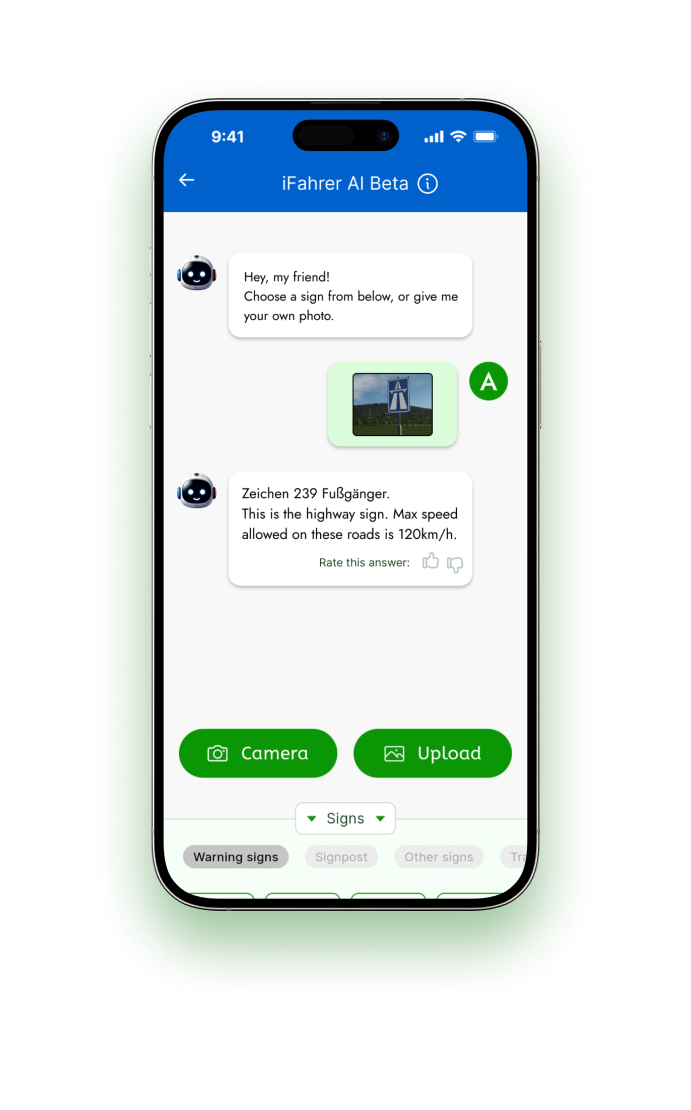
Get ready for your license test with AI assistance!
Where do you have to anticipate encountering rail crossings with no technical safeguards?
On less-frequently used roads
In industrial zones and port areas
On dirt tracks and forest tracks
Here is Our AI Assistant's Explanation
Rail crossings without technical safeguards means there are no barriers, no flashing red lights, and often no audible warning system. You have to expect them especially where traffic volumes are low or where the railway serves mainly local or commercial purposes, because installing and maintaining full technical protection is less common there.
Your choices 1, 2, and 3 are all correct because: On less-frequently used roads, crossings are often only secured with simple signs (like the St. Andrew’s cross) and rely on road users paying attention. In industrial zones and port areas, there are many factory or harbor sidings used by freight trains; these crossings are frequently simple, sometimes even within yards or access roads, and may not have full barrier systems. On dirt tracks and forest tracks, there can be agricultural/forestry rail lines or access routes crossing tracks, again often with only minimal signage and no technical equipment.
Rule of thumb for similar questions: the more “remote,” “private/commercial,” or “low-traffic” the road environment is, the more you must anticipate minimally secured rail crossings and approach ready to stop, look both ways, and listen even if you don’t see lights or barriers.